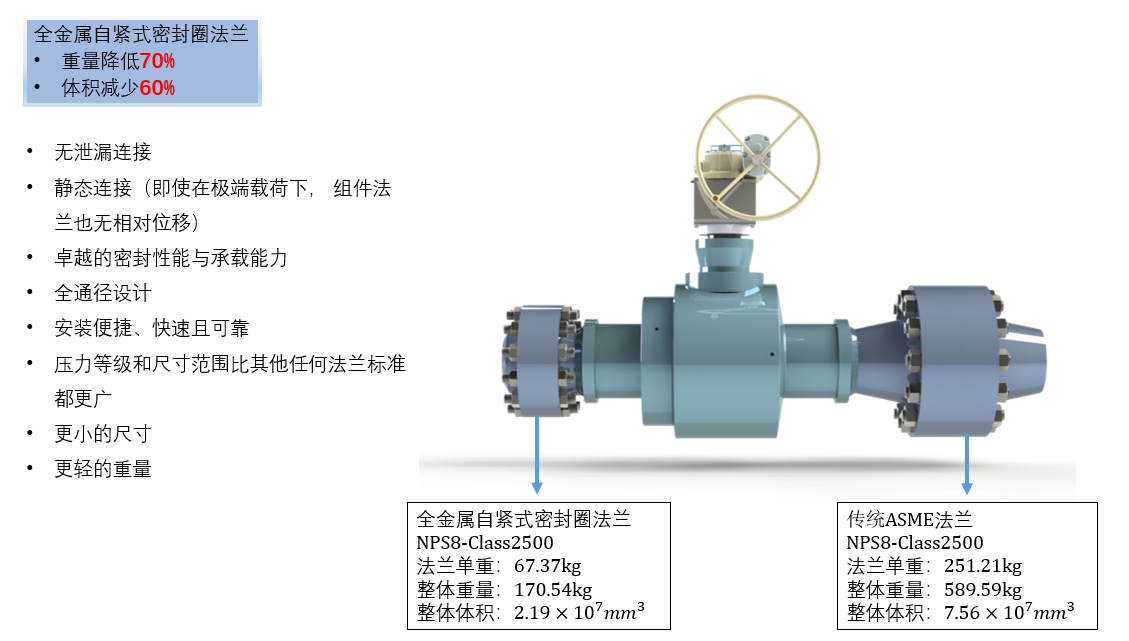
For a long time, high-pressure flange connections have primarily relied on traditional RTJ (Ring Type Joint) gaskets or welding. Both methods are cumbersome, time-consuming to install, and deliver suboptimal performance. Plastic deformation in RTJ gaskets leads to frequent external leakage, and since they cannot be reused—effectively becoming "scrap upon disassembly"—maintenance costs remain high. Similarly, welding is labor-intensive and plagued by inspection "blind spots," resulting in long recovery cycles, high costs, and difficulty in controlling pipeline deformation.
To address these chronic industry challenges, Antiwear (ATW) introduced the concept of the "Pressure-Energized Metal Seal Ring." By revisiting the fundamental sealing mechanism and accumulating extensive experimental data on various metallic materials, ATW established robust mathematical and application models for pressure-energized seals. The objective was clear: to achieve not only reliable sealing under high pressure but also full reusability after multiple disassemblies.
Guided by these models, Antiwear successfully prototyped multiple sets of 8"-2500lb pressure-energized metal seal rings. Following rigorous testing—including repeated disassembly, mixed-component assembly, and high/low-pressure cycling at 1.5 times the nominal pressure—the ATW seal consistently maintained zero leakage. This design ensures that repeated handling does not compromise sealing integrity and achieves universal compatibility between the metal seals and flanges.