High frequency triple offset butterfly valve
×
Consult
Working condition
Pain Points and Proposal
① High valve torque: The higher the pressure on the sealing surface, the greater the risk of wear, creep, overload, and metal galling, which increases the likelihood of sealing surface damage and internal leakage.
② Poor fit between seal ring and seat: Leads to stress concentration and premature failure.
2. Not Original Manufacturer, Unable to Repair
① Irregular conical sealing surface: The seal ring and valve seat form an irregular conical surface with an eccentric angle that is difficult to measure accurately. Without precise knowledge of the taper angle and dimensional chain tolerances, repair quality cannot be guaranteed.
② Fixed seat design: The valve seat cannot be removed.
③ Non-interchangeable components: Seal rings and valve seats cannot be standardized or swapped.
3. Pressure Test Passes, Leakage Exceeds Limit Upon Commissioning
Using a blind flange for pressure testing, the large cavity prevents bubbles from escaping through the conduit within the standard test duration, masking potential leakage.
4. Sticking
① Medium accumulation in bearings: Causes sudden changes in friction between the stem and bearings, increasing torque.
② Stem surface not hardened: Leads to scratches and damage on the stem surface.
5. Packing Leakage
Long-term high-frequency operation causes packing wear, resulting in external leakage.
Reference
-
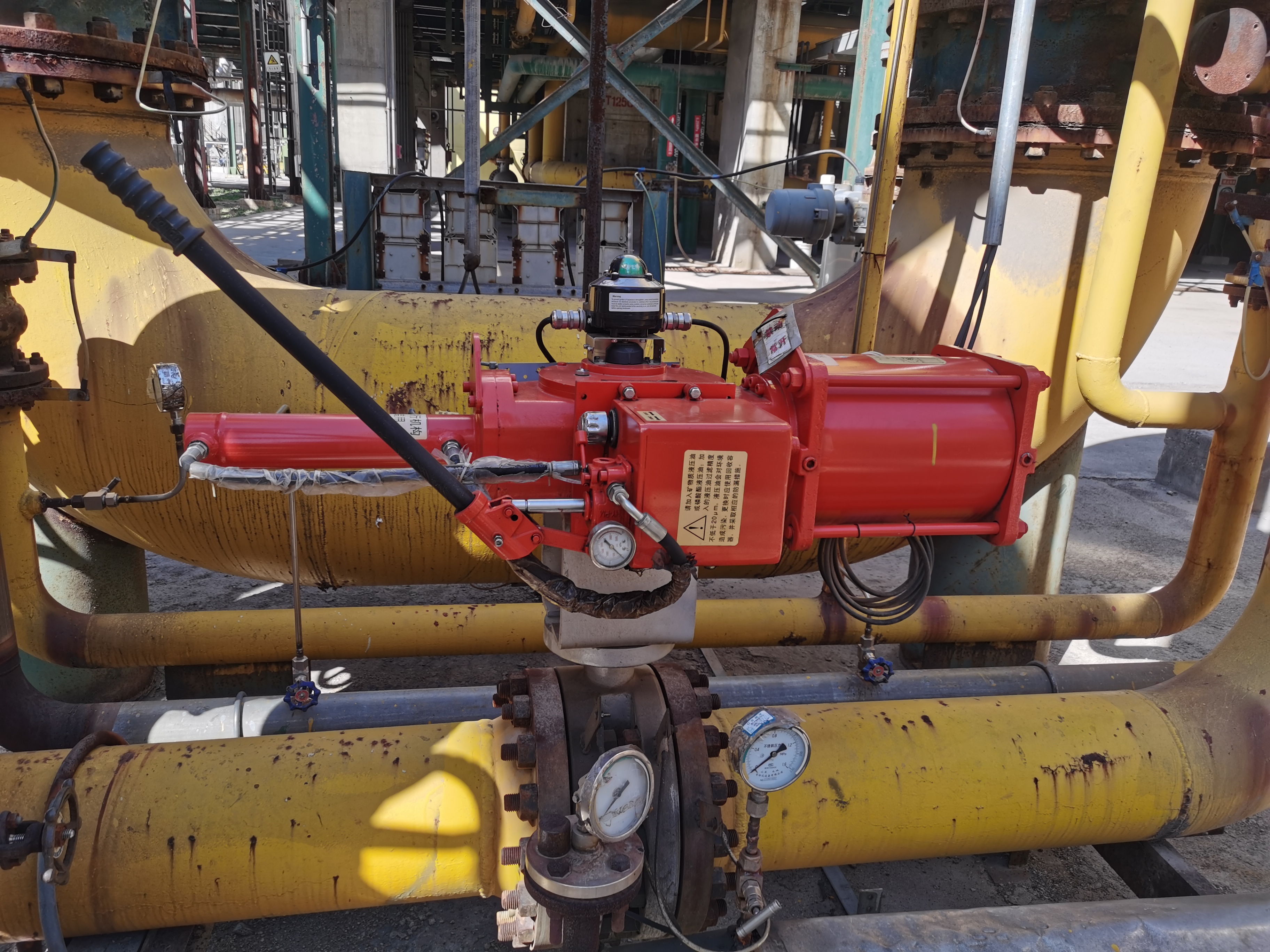
Customer: Zhongyuan Dahua
Equipment: Pressure Swing Adsorption (PSA)
Valve Specifications: NPS 16, Class 300
Operating Temperature: 40°C
Commissioning Date: October 2019