Specifications: NPS 2, Class 300
Medium: Silicon Powder, Hydrogen
Application: Commissioned in 2019;
operated for 3 years with zero issues
Working condition
| Applicable Medium | Solid particles in gas, slag water, or gas, liquid, solid fluid mixtures |
| Pressure Rating | CLASS 150 ~ CLASS 900 (PN16 ~ PN150) |
| Nominal Diameter | NPS 1.5 ~ NPS 24 (DN40 ~ DN600) |
| Internal Leakage Standard | ANSI FCI 70-2 CLASS VI or higher |
| Operating Temperature | ≤ 500°C |
| Operation Method | Pneumatic |
Pain Points and Proposal
1. Erosion:
Hard fluid erosion damages sealing surfaces.
2. Abrasive:
Solid particles can enter and damage the sealing surfaces.
3. Jamming:
Solid particles accumulate inside valve pocket, increase valve operating torque, resulting valve jamming and even cannot be operated.
Erosion & Wear Resistance (Key to long service life under severe conditions)
● Solid sintered Carbide Disc & Seat:
Engineered with solid sintered carbide construction for exceptional erosion resistance,
high hardness (≥85 HRA), and superior corrosion protection.
● Hardened Flow Path:
Features either flame-sprayed hardening or full carbide liner for sustained integrity.
● Self-rotating and self milling trim:
Rotating mechanism continuously mills sealing surfaces, a good compensating for wear.
● Scraper design:
Scraper design prevents particle entering sealing surface.
● Sliding Motion:
Disc is parallel to seat, eliminating high-impact erosion from sudden flow re-direction.
Preventing Buildup Prevents Jams
● Open valve pocket Design:
Maximizes media flow-through.
● Standard Purge port design:
End user can design purging system to avid solid medium accumulation by purge port.
Reference
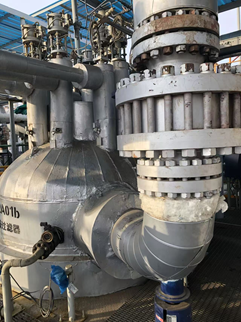
Application: Commissioned in 2019;
operated for 3 years with zero issues